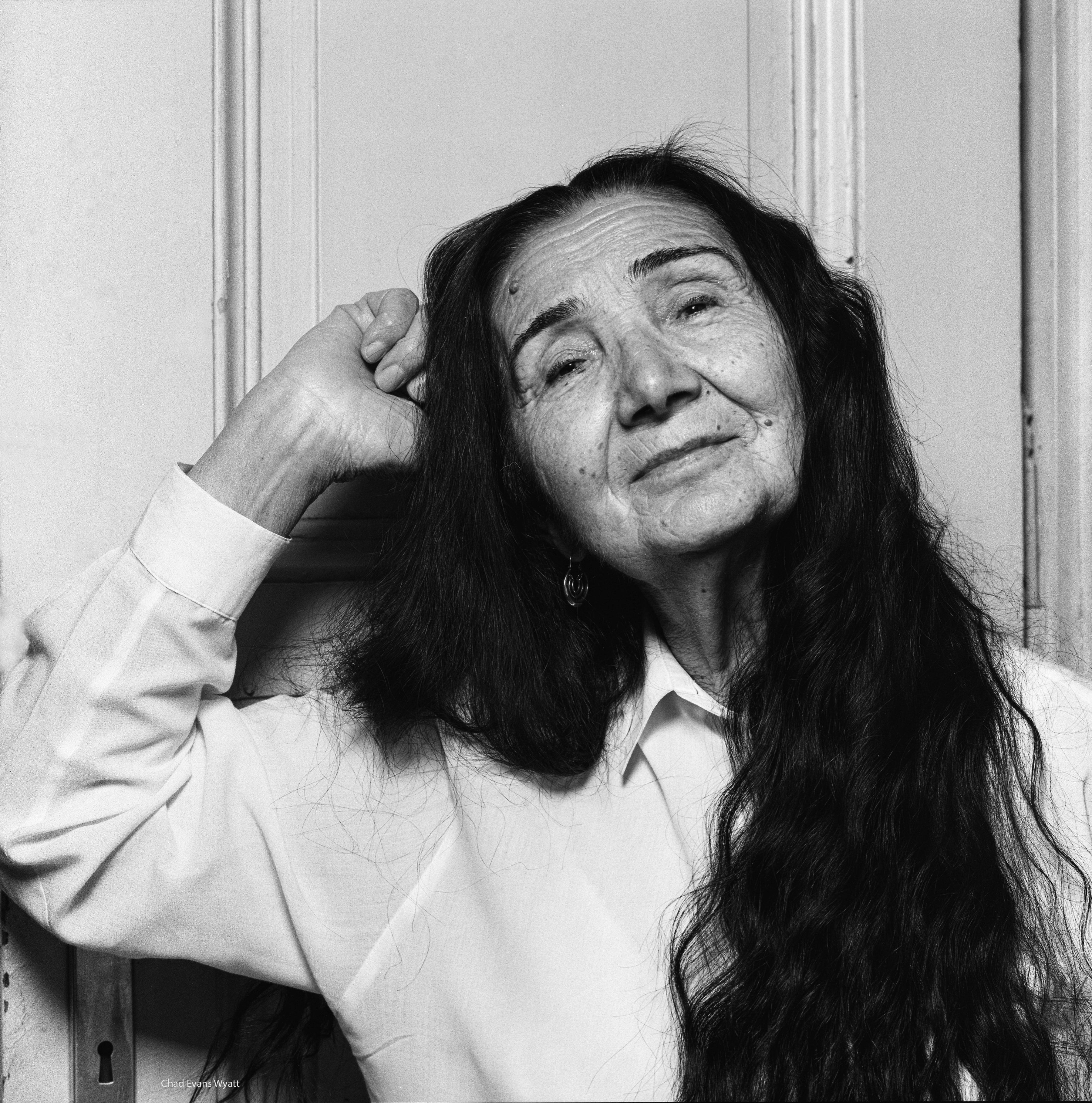
Tera Fabiánová was born in Žihárec in southern Slovakia. Her father was drafted into the Hungarian army, so Tera helped her mother earn a living from an early age. During World War II, Roma in Slovakia faced discrimination and persecution. Romani children, for example, were not allowed to attend school, which is why she only completed three grades. After the war, the family left for work in Bohemia, where Fabiánová eventually became a crane and excavator operator at ČKD Machinery in Prague. She had four children.
She began writing in the late 1960s for the Romani magazine Románo ľil / Romani Paper, where she became a popular writer, especially among female readers, as her poems, essays and short stories often focused on women’s emancipation, but she also addressed the issue of coexistence between Czechs and the Romani minority. She became an inspiration to ordinary Romani people and many Romani writers. During the 1970s and 1980s, she continued to write, although publication in mainstream media was impossible. Fabiánová's work was released sporadically, for example as part of methodological guidelines for teachers or social workers, which were printed in limited numbers of a few hundred copies. The situation changed after 1989. In the early 1990s, she published a Romani-Czech story for children Čavargoš / Tramp (Apeiron 1991). A year later, she released an autobiographical title for children Sar me phiravas andre škola / How I Went to School (ÚDO Publishing House 1992), which had probably been written as early as the mid-1970s. Around 2000, her poem “E bacht ke mande avel” / “Happiness Comes to Me” was displayed as part of the Poetry for Travellers series in the Prague metro.
Photo: Chad Evans Wyatt